Build Your HOA Website Free
Running an HOA is a big job for a volunteer.
Neighborhood.online gives your community a modern website, document storage, and communication tools in minutes.
No technical skills required.
What Is a Capital Improvement?

At some point, almost every HOA board faces a version of this question: is this project a capital improvement, or is it just maintenance? The answer matters more than it might seem. It determines which fund pays for the work, how the project gets approved, how it should be communicated to homeowners, and in some cases, how it affects the community's taxes. Getting it wrong creates budget confusion, homeowner complaints, and sometimes legal problems.
This guide answers the question plainly. It defines what a capital improvement is, walks through real examples of what does and does not qualify, and covers how HOA boards should plan, fund, and communicate capital projects once they have been correctly identified.
What Is a Capital Improvement?
A capital improvement is a significant, planned project that adds value to a property, extends its useful life, or adapts it to a new or different use. In a homeowners association, capital improvements are changes to common area assets that go beyond keeping existing things functional. They improve, enhance, or replace something at the end of its useful life.
The key characteristics of a capital improvement are that it is substantial in cost, it is not a recurring or routine task, it results in a lasting benefit to the property, and it is typically funded from the reserve fund rather than the operating budget. Capital improvements show up in the reserve study because they represent the major replacements and enhancements the community will need to fund over a long planning horizon.
Some examples that clearly qualify: building a new community clubhouse, replacing the roof at the end of its lifespan, resurfacing the pool, repaving the parking lot, installing a new playground structure, adding a security gate system that did not previously exist, or replacing a retaining wall that has failed. These are projects that significantly change or renew a common area asset.
Capital Improvements vs. Routine Maintenance
The distinction between a capital improvement and routine maintenance is one of the most practically important distinctions an HOA board makes, and it is also one of the most commonly confused.
Routine maintenance keeps existing assets in working condition. It is recurring, relatively low in cost, and funded from the operating budget. Mowing the lawn, cleaning the pool filters, lubricating gate hardware, replacing burned-out light bulbs, painting a fence to protect it from weathering, and patching a small section of roof after a storm are all routine maintenance tasks. They preserve what already exists.
A capital improvement changes, replaces, or significantly upgrades what exists. It is non-recurring, higher in cost, and funded from the reserve fund or through a special assessment or capital improvement fee. When the fence that has been maintained for 20 years finally reaches the end of its useful life and needs full replacement, that replacement is a capital improvement. When the pool surface has been regularly maintained but finally needs complete resurfacing, that is a capital improvement. The work shifts from preserving something to renewing it.
The line between the two can get blurry in practice, which is why boards benefit from clear written policies defining the threshold. A common approach is to set a dollar amount, often $2,500 or $5,000, above which a project is classified as a capital expenditure requiring reserve fund approval, and below which it falls into the operating maintenance budget. Your governing documents may specify this threshold, and it is worth checking before classifying any project.
For a deeper look at how maintenance and capital projects work together across the operating year, the guide on HOA operations and maintenance mastery covers the full picture.
Real Examples: What Counts and What Does Not
Is a New Roof a Capital Improvement?
Yes, in most cases. When a roof reaches the end of its useful life and requires full replacement, that replacement is a capital improvement. It is a significant one-time project that renews a major building component and is funded from the reserve fund in a well-run HOA.
Routine roof maintenance, by contrast, is not a capital improvement. Cleaning gutters, inspecting flashing, replacing a handful of damaged shingles, and sealing penetrations are maintenance tasks that belong in the operating budget. The distinction is between preserving a functional roof and replacing one that has reached the end of its life.
Note that some states have specific guidance on this. In California and several other states with mandatory reserve study requirements, roof replacement is explicitly identified as a reserve-funded capital component that must be accounted for in the long-term financial plan.
Is Painting a Capital Improvement?
It depends on what is being painted and why. Touch-up painting of exterior surfaces as part of a regular preventive maintenance program is routine maintenance, not a capital improvement. It belongs in the operating budget and should happen on a recurring schedule to protect wood and metal surfaces from moisture and ultraviolet damage.
A full exterior repaint of all community buildings, undertaken because the surfaces have reached the end of their paint cycle and require complete recoating, is typically treated as a capital improvement. It is a significant one-time project that renews a major exterior surface and is usually funded from reserves. The scale and non-recurring nature of the project are what push it into capital territory.
If your community has not been maintaining exterior paint as a routine task, the cost of catching up may be higher, but the classification logic is the same. The question is whether you are preserving an existing paint surface or renewing one that has fully deteriorated.
Is Landscaping a Capital Improvement?
Routine landscaping, meaning regular mowing, trimming, fertilizing, irrigation adjustments, and seasonal cleanup, is maintenance. It is recurring, relatively low in cost, and belongs in the operating budget. Landscaping is actually the most commonly maintained HOA service, reported by 52% of associations according to National Association of Realtors data. For a full breakdown of what landscaping and other seasonal maintenance tasks belong in each month, the essential HOA maintenance checklist covers the full year.
However, certain landscaping projects do qualify as capital improvements. Installing a new irrigation system where one did not previously exist is a capital improvement. Completely redesigning and replanting a common area that has reached the end of its planting lifecycle is a capital improvement. Installing permanent hardscape such as walkways, retaining walls, or decorative features that did not previously exist is a capital improvement. The test is whether the project adds lasting value or replaces something that has reached end of life, rather than simply maintaining what already exists.
Is Tree Removal a Capital Improvement?
Usually not. Routine tree removal, such as removing a diseased or hazardous tree as part of regular grounds maintenance, is typically an operating expense rather than a capital improvement. It is maintenance of the grounds, not an enhancement to them.
However, large-scale tree removal as part of a planned landscape renovation or capital project can be included in the capital budget when it is part of a broader improvement rather than a standalone maintenance task. If your HOA is undertaking a full common area redesign and tree removal is part of that scope, it flows naturally into the capital project budget. If it is a single hazardous tree that needs to come down for safety reasons, it belongs in operating maintenance.
Are Roads and Sidewalks Capital Improvements?
Patching and filling cracks in community roads and sidewalks is routine maintenance. Full resurfacing or replacement of roads and sidewalks that have reached the end of their useful life is a capital improvement. The same principle applies as with roofing: preserving a functional surface is maintenance, renewing one that has failed is capital.
Road and sidewalk maintenance is one of the most commonly overlooked categories in HOA reserve planning. Many boards patch and fill for years without accounting for the eventual full replacement cost in their reserve fund. When resurfacing day finally arrives, communities without adequate reserves face large special assessments that could have been avoided with proper long-term planning.
Is Pool Resurfacing a Capital Improvement?
Yes. Pool resurfacing is a classic example of a capital improvement in community associations. The interior surface of a community pool has a finite useful life, typically between ten and twenty years depending on usage and maintenance, and when it reaches the end of that life the resurfacing project is a significant non-recurring expense that belongs in the reserve fund.
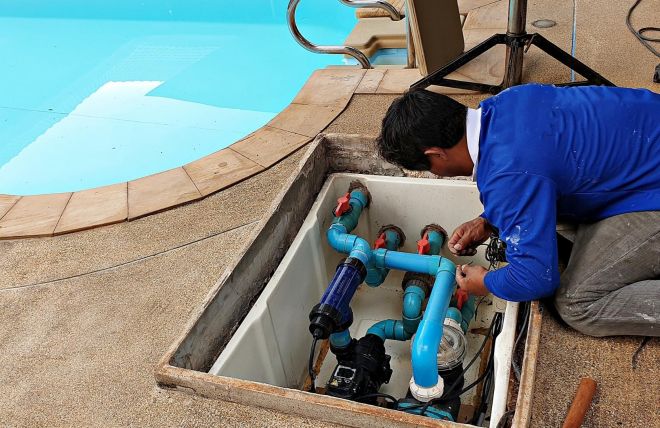
Regular pool maintenance, meaning water chemistry management, filter cleaning, equipment servicing, and minor repairs, is operating maintenance. The resurfacing is capital. Boards that have been diligently maintaining their pool for fifteen years should not be surprised by the resurfacing cost if it was properly accounted for in the reserve study from the beginning.
What Is a Major Capital Improvement?
A major capital improvement is a capital project that is substantial enough in cost, scope, or impact to require formal board approval, homeowner notification, and often a dedicated source of funding beyond the regular reserve balance. There is no universal dollar threshold that defines major, but in practice the term is used for projects that represent a significant portion of the annual operating budget or reserve fund, affect common areas that all residents use daily, require a lengthy planning and execution timeline, or involve specialized contractors and professional oversight.
Examples of major capital improvements in HOAs include full roof replacements on multiple buildings, complete parking lot repaving, pool renovation or replacement, community clubhouse renovation, new amenity construction such as a fitness center or dog park, and large-scale infrastructure replacement such as community water or sewer lines where the HOA has responsibility.
Major capital improvements almost always require homeowner communication before they begin, updates during execution, and a completion notice when they are done. They are also the projects most likely to require a special assessment or external financing if the reserve fund is not adequately funded. For guidance on how to plan and execute major capital improvements from start to finish, the guide on planning capital improvements for your HOA covers the full process.
What Is a Capital Improvement Plan?
A capital improvement plan, sometimes called a CIP, is a multi-year schedule of planned capital projects with associated cost estimates and funding sources. In a community association context, the capital improvement plan is closely related to, and often derived from, the reserve study.
A good capital improvement plan answers four questions for every project: what is being done, when is it scheduled, what will it cost, and how will it be funded. It looks forward typically five to thirty years and gives the board a roadmap for managing the community's major asset renewals in an orderly, financially planned way rather than reacting to failures as they happen.
The reserve study is the foundation of the capital improvement plan because it inventories all major components, estimates their remaining useful life, and projects their replacement cost. The capital improvement plan takes that information and turns it into an actionable project schedule that the board can communicate to homeowners, use to plan reserve contributions, and reference when evaluating vendor bids.
Boards that have a capital improvement plan in place make better financial decisions, communicate more transparently with homeowners, and avoid the scramble that happens when a major component fails without warning and without funding in place.
How HOA Capital Improvements Are Funded
Most HOA capital improvements are funded through one of three sources, and the choice of funding source matters for both financial health and homeowner relations.
Reserve funds are the appropriate and preferred source for planned capital improvements. A well-funded reserve study looks ahead and sets aside money annually for each major component replacement so that when the time comes the funds are available without disruption. Reserve funds are collected through regular assessments and held separately from operating funds. Industry guidance generally recommends that HOAs maintain a reserve fund that is at least 70% funded relative to the projected needs in the reserve study. For a plain-language explanation of how reserve funds work and why they matter, the guide on reserve funds explained in simple terms is a helpful starting point.
Capital improvement fees are contributions collected from homeowners specifically for major projects. Some governing documents allow boards to levy capital improvement fees separately from regular dues when a significant project is planned. These fees are earmarked for the specific project and cannot be redirected to operating expenses.
Special assessments are a last resort, not a first option. They require homeowners to pay additional lump sums on relatively short notice and almost always generate friction, complaints, and sometimes legal challenges. Boards that maintain healthy reserves and plan projects well through a capital improvement plan rarely need special assessments. When they are unavoidable, clear and early communication about why the assessment is necessary, what it will fund, and how the board arrived at the decision significantly reduces homeowner resistance.
How to Communicate Capital Projects to Homeowners
Capital improvement projects are the most visible thing an HOA board does. Residents will see the construction, experience the disruption, and form opinions about the board based on how well the process was managed and communicated. The finished result matters, but so does how residents felt throughout the project.
Boards that communicate capital projects well follow a simple pattern. Before work begins, send a detailed notice explaining what is being done, why it is being done, what the timeline and budget are, what disruptions residents should expect, and who to contact with questions. During the project, send updates when the timeline changes, when unexpected conditions are discovered, or when anything deviates from the original plan. When the project is complete, send a completion notice confirming what was done and thanking residents for their patience. For a broader look at how capital projects fit into the full operations picture, the guide on HOA operations and maintenance mastery covers vendor management, resident communication, and seasonal planning together.
The free HOA Seasonal Maintenance Calendar helps boards build the habit of planning and communicating maintenance and capital work proactively across the full year rather than managing each project in isolation.
Free Download: HOA Seasonal Maintenance Calendar
A full year of maintenance tasks organized by month, color-coded by category, with a built-in status tracker your board can update as tasks are completed.
Download the Free CalendarHow Technology Helps With Capital Improvement Planning
Managing capital improvements well means keeping track of a lot of moving parts: vendor contracts, project timelines, reserve fund balances, inspection reports, homeowner notices, and completion documentation. When that information lives across board members' email accounts, printed binders, and memory, it does not survive board turnover and it does not protect the board when questions arise.
Neighborhood.online gives boards a central place to store capital project documentation, manage vendor relationships, track work orders. When a new board member joins mid-project, they can immediately see the full history of what was planned, what was bid, what was approved, and what has been completed, without having to ask the outgoing president to forward a folder of files.
Build Your HOA Website Free
Neighborhood.online gives your board one place to manage work orders, store maintenance records, communicate with residents, and keep everything your community needs. No developer. No credit card. Live in under an hour.
Build Your Site FreeThe Bottom Line
Getting capital improvements right starts with understanding what they are and what they are not. A capital improvement adds value, replaces something at end of life, or enhances what exists. Routine maintenance keeps what exists functional. The distinction determines the funding source, the approval process, the communication approach, and the long-term financial planning that protects the community.
When boards classify projects correctly, fund them from the right source, plan them through a capital improvement plan tied to the reserve study, and communicate them clearly to homeowners, capital projects become something the community looks forward to rather than something they dread. That is the difference between a board that manages capital improvements well and one that does not.