Build Your HOA Website Free
Running an HOA is a big job for a volunteer.
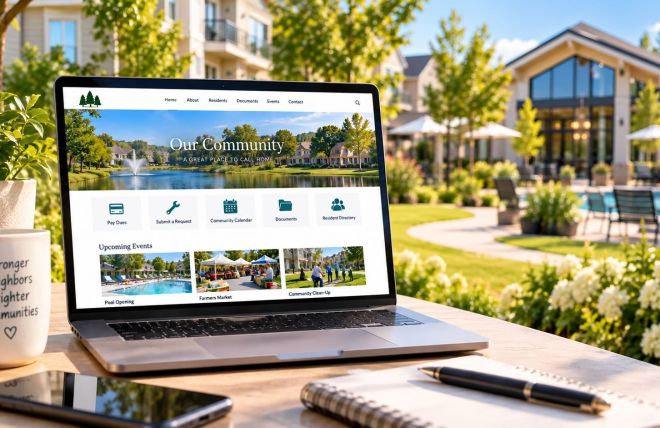
Neighborhood.online gives your community a modern website, document storage, and communication tools in minutes.
No technical skills required.
Amenity Rules Homeowners Break Most

Updated July 21, 2026
Every HOA board has a short list of HOA common area rules that get broken over and over again. The same issues come up every summer: guests at the pool without a resident, dogs in the fitness center, someone using the clubhouse without a reservation. The violations are predictable. The frustration is real. And in most cases, the root cause is not that residents are inconsiderate. It is that the rules were not communicated clearly enough for residents to actually internalize them.
This article covers the amenity rules that get broken most often, why they tend to be ignored, and what boards can do to reduce violations through better communication rather than heavier enforcement.
Download the Free Amenity Rules Starter Pack
Why Residents Break Amenity Rules
Before getting into which rules get broken most, it helps to understand why rules get broken in the first place. In most cases it is not deliberate disregard. It is one of three things: the resident did not know the rule existed, the rule was posted somewhere they never saw it, or the rule was written in language vague enough that they genuinely interpreted it differently than the board intended.
According to research from the Foundation for Community Association Research, parking, noise, and pets are the three most common sources of conflict in HOA communities, and all three show up repeatedly in amenity settings. The pool deck, the dog park, the clubhouse after hours: these are the places where neighbor-to-neighbor tension is most likely to ignite.
The good news is that most of these conflicts are preventable. Research from the Community Associations Institute found that 65% of HOA residents say the rules in their community protect and enhance property values. Residents are not generally opposed to rules. They just need to know what the rules are and feel like they apply fairly to everyone.
That starts with communication, not enforcement.
The Amenity Rules That Get Broken Most Often
Guest policies at the pool. This is the single most common source of pool conflict in HOA communities. A resident invites friends over, the friends show up at the pool without the resident, and someone complains. Or a household brings eight guests on a Saturday afternoon and takes over the space. The rule usually exists. The problem is that it was posted once at the start of the season and never reinforced. Guest limits and supervision requirements need to be in the opening announcement, posted visibly at the entrance, and mentioned in any mid-season reminder the board sends. Specific language matters more than most boards realize. A rule that says "guests are permitted" creates far more conflict than one that says "residents may bring up to two guests per visit and must accompany them at all times."
Glass containers and food in pool areas. This one gets broken constantly, and almost always unintentionally. Someone brings a glass of wine because they did not realize glass was prohibited. The rule needs to be on the signage at the entrance, not just in the governing documents. If the sign says "no glass containers" in plain language, most residents will comply without being asked twice.
Unsupervised children. Age requirements and supervision rules are among the most important rules a board can have and among the most frequently ignored. Parents drop children at the pool or playground and leave. This creates liability exposure for the HOA and genuine safety risk for the children involved. The rule needs to state the minimum age clearly, specify what supervision means, and explain the consequence for noncompliance. Vague language like "children must be supervised" is much harder to enforce than "children under age 14 must be accompanied by a resident aged 18 or older at all times."
Equipment wipe-down in the fitness center. Fitness center sanitation rules are broken almost universally in communities where the wipe-down supplies are not easily accessible. If the spray bottle is in a cabinet across the room, most people will not use it. If it is mounted next to every piece of equipment with paper towels right there, compliance goes up dramatically without any enforcement at all. The rule is the same either way. The environment changes the behavior.
Clubhouse use without a reservation. Boards spend significant time dealing with residents who show up to use the clubhouse when another resident has reserved it, or who use it informally without going through the reservation process. A clear reservation policy, communicated to all residents at least once per year, and a simple booking process eliminates most of this. When the process is easy, residents use it. When it requires emailing three board members and waiting a week for a response, they stop trying.
Dog park rules around waste cleanup and aggressive dogs. Dog parks generate more neighbor complaints per square foot than almost any other amenity. Waste bags not being used, dogs being left unattended, and incidents involving aggressive dogs are the most common issues. The rule usually exists. The problem is enforcement feel personal and confrontational in a dog park setting. Clear posted signage, a defined process for reporting concerns to the board rather than handling them resident to resident, and consistent communication about expectations reduces the friction significantly.
Noise and hours in shared spaces. Late-night noise in the clubhouse, music at the pool, parties that go past posted hours: these come up in communities of every size. Residents often underestimate how much noise carries, and they frequently do not know what the posted hours are because they have never looked. Hours need to be on the signage at every entrance to every amenity, not just in a document somewhere.
How Better Communication Reduces Violations
The pattern across all of these is the same. The rule exists. The communication does not match the rule. Residents fill the gap with their own interpretation, and conflict follows.
A few things that actually move the needle:
Send a seasonal reminder before the problem occurs, not after. A brief notice at the start of pool season covering the three or four rules that generated the most complaints last year prevents most of those complaints from happening again. Framing matters. Starting with "most of our residents are great neighbors and we appreciate that" before listing reminders lands very differently than starting with a list of violations.
Post rules in the language residents actually use. Governing documents are written for legal enforceability. Signage should be written for human beings. Short sentences, plain language, and specific numbers make rules far easier to follow. "Maximum two guests per household" is clearer than "guests must be accompanied by a resident in accordance with HOA policy."
Make the rules easy to find. If a resident has to request a copy of the rules from the board, the rules are not accessible enough. Rules for every amenity should be posted at the amenity itself, available on your HOA website, and included in new resident welcome materials. Managing all of your community amenities effectively starts with making sure residents know what is expected of them before they ever set foot in the space.
Use community-wide reminders before escalating to individual enforcement. When a particular rule is being broken repeatedly, a friendly community-wide reminder is almost always the right first step. It gives residents the benefit of the doubt, protects the board from accusations of selective enforcement, and resolves the majority of situations without anyone feeling singled out.
How Technology Can Help
One of the most practical things a board can do to reduce amenity rule violations is make rules permanently accessible in one place that residents can find on their own. When someone is unsure whether they can bring a guest to the pool, they should be able to look it up in thirty seconds rather than waiting for the board to respond to an email.
Neighborhood.online gives boards a place to post amenity rules, send seasonal notices, and communicate updates to all residents at once. When rules change, the update goes out immediately rather than waiting for the next newsletter. When a seasonal reminder needs to go out, it takes minutes rather than hours. The goal is removing the friction between the board having a rule and residents actually knowing about it.
The Bottom Line
Most amenity rule violations are not a people problem. They are a communication problem. Residents who know the rules, understand why they exist, and feel like they apply fairly to everyone are far more likely to follow them than residents who feel like rules are being applied inconsistently or pulled out only when someone complains.
Clear rules, consistently communicated, posted where residents will actually see them, and reinforced with friendly reminders before problems escalate: that is the combination that actually reduces the call volume to the board and makes shared spaces work the way they are supposed to.
Download the Free Amenity Rules Starter Pack
The Amenity Rules Starter Pack includes ready-made rule templates for pools, playgrounds, fitness centers, clubhouses, dog parks, and common areas, with fill-in-the-blank fields for your community's specific details. It also includes six ready-to-send communication templates for new rules, updated hours, closures, reopenings, and seasonal reminders.
References
Community Associations Institute. (2026, July/August). Your turn: Member pulse. Common Ground. https://www.caionline.org/publications/common-ground/
Foundation for Community Association Research. (2026). Preferred places to call home: Resident perspectives on community association living. Community Associations Institute. https://foundation.caionline.org/