Build Your HOA Website Free
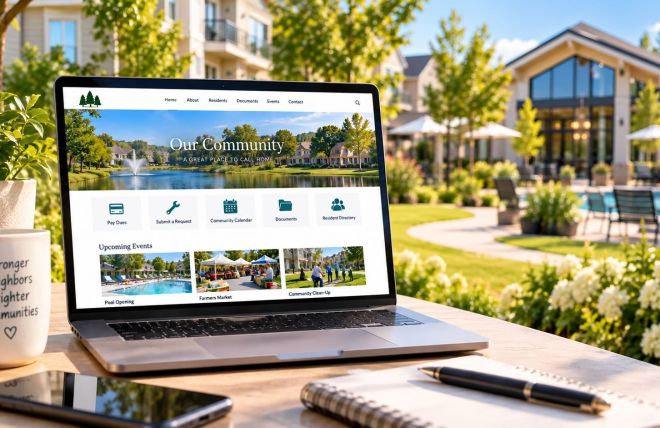
Neighborhood.online gives your community a modern website, document storage, and communication tools in minutes. No technical skills required.
The Complete HOA Amenities Guide

Updated July 16, 2026
Community amenities are the most visible thing your HOA manages. The pool, the playground, the clubhouse, the fitness center: residents use them every day, and when something goes wrong, they notice immediately. When everything runs smoothly, most residents do not think about how much work goes into making that happen. That invisibility is actually the goal.
This guide covers everything HOA boards need to think about when it comes to managing shared spaces: how to write rules that actually work, how to run inspections before problems become emergencies, how to handle reservations without conflict, how to manage vendors, and how to communicate with residents in a way that reduces complaints rather than creating them.
Download the Free Amenity Inspection Checklists
What Makes Community Amenities Successful
It is not the equipment. Plenty of communities with aging pools and basic playgrounds have far fewer amenity headaches than communities with brand new facilities and no clear plan for managing them.
What actually makes community amenities work is clarity, consistency, and communication. Residents need to know what the rules are, why they exist, and what happens when someone does not follow them. Boards need a regular inspection routine, clear vendor relationships, and a communication plan that does not require scrambling every time something changes.
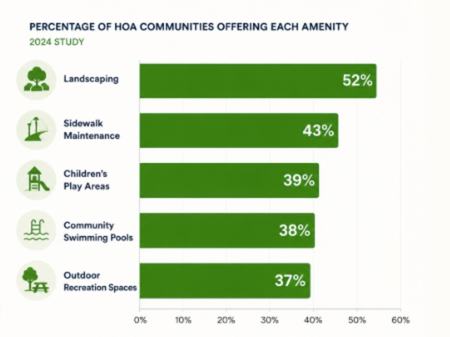
Shared amenities are a major reason people choose HOA communities in the first place. A 2024 study found that the most common HOA amenities nationwide include landscaping at 52%, sidewalk maintenance at 43%, children's play areas at 39%, community swimming pools at 38%, and outdoor recreation spaces at 37%. Residents are paying for these spaces through their dues, and they notice when they are not managed well.
According to research published in Common Ground by the Community Associations Institute in July 2026, 88% of HOA communities offer social or neighbor mixer events and 84% offer holiday and seasonal programming. The pool, clubhouse, and outdoor spaces are the backdrop for almost all of it. When those spaces are well managed, community life improves. When they are not, it becomes the board's most consistent source of complaints.
Parking, noise, and pets are the top three sources of conflict in HOA communities according to the Foundation for Community Association Research, and amenities sit at the center of all three. The investment in getting amenity management right pays off everywhere else too.
Why Amenity Management Is Harder Than It Looks
Volunteer board members did not sign up to be facility managers. Most boards are juggling amenity oversight alongside full-time jobs, families, and everything else that comes with being a homeowner. The challenge is that amenities do not take a break just because the board is busy.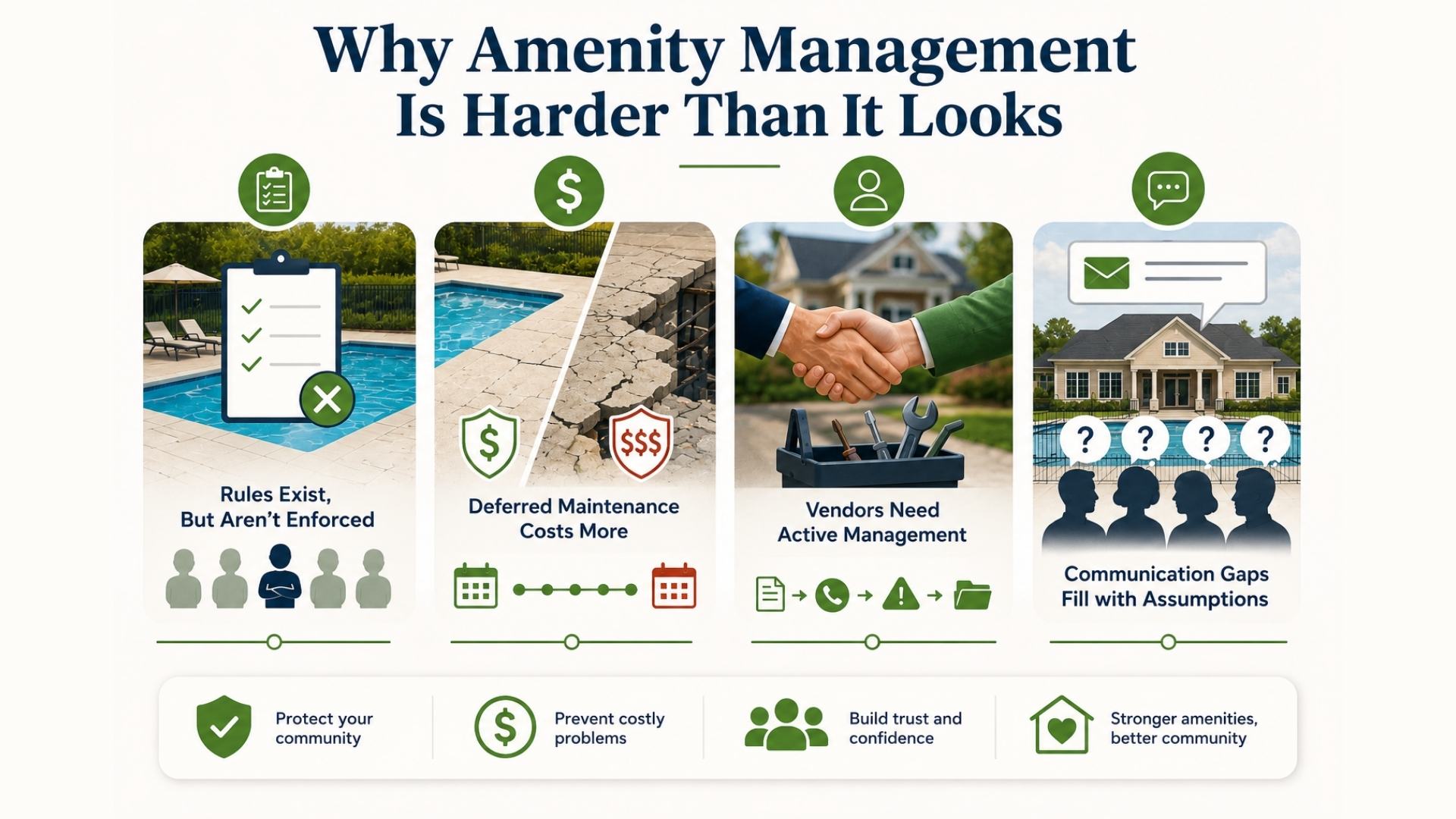
A few things that catch boards off guard:
Rules that exist but are not enforced become the new baseline. Once residents realize a rule is not being enforced, it effectively stops existing. Selective enforcement is one of the fastest ways to create legal exposure for a board and destroy trust with residents at the same time. Clear rules, consistently applied, are far easier to defend than rules applied case by case.
Deferred maintenance compounds faster than most boards expect. Research from the Foundation for Community Association Research found that deferred maintenance can cost 30 to 100 times more than addressing issues proactively through routine preventive care. A cracked pool deck that costs a few hundred dollars to seal today can become a liability claim and a five-figure repair if it is ignored for two seasons.
Vendor relationships require active management. Signing a contract and assuming the work will get done is not a vendor management strategy. Boards need to know what is covered, what is not, who to call when something goes wrong, and how to document issues when they arise.
Communication gaps fill with assumptions. When residents do not know why the pool is closed or why the clubhouse is unavailable, they fill the gap with whatever explanation feels most plausible to them. Usually that explanation involves the board doing something wrong. A two-sentence notice sent in advance prevents hours of damage control.
How HOA Boards Should Manage Amenities
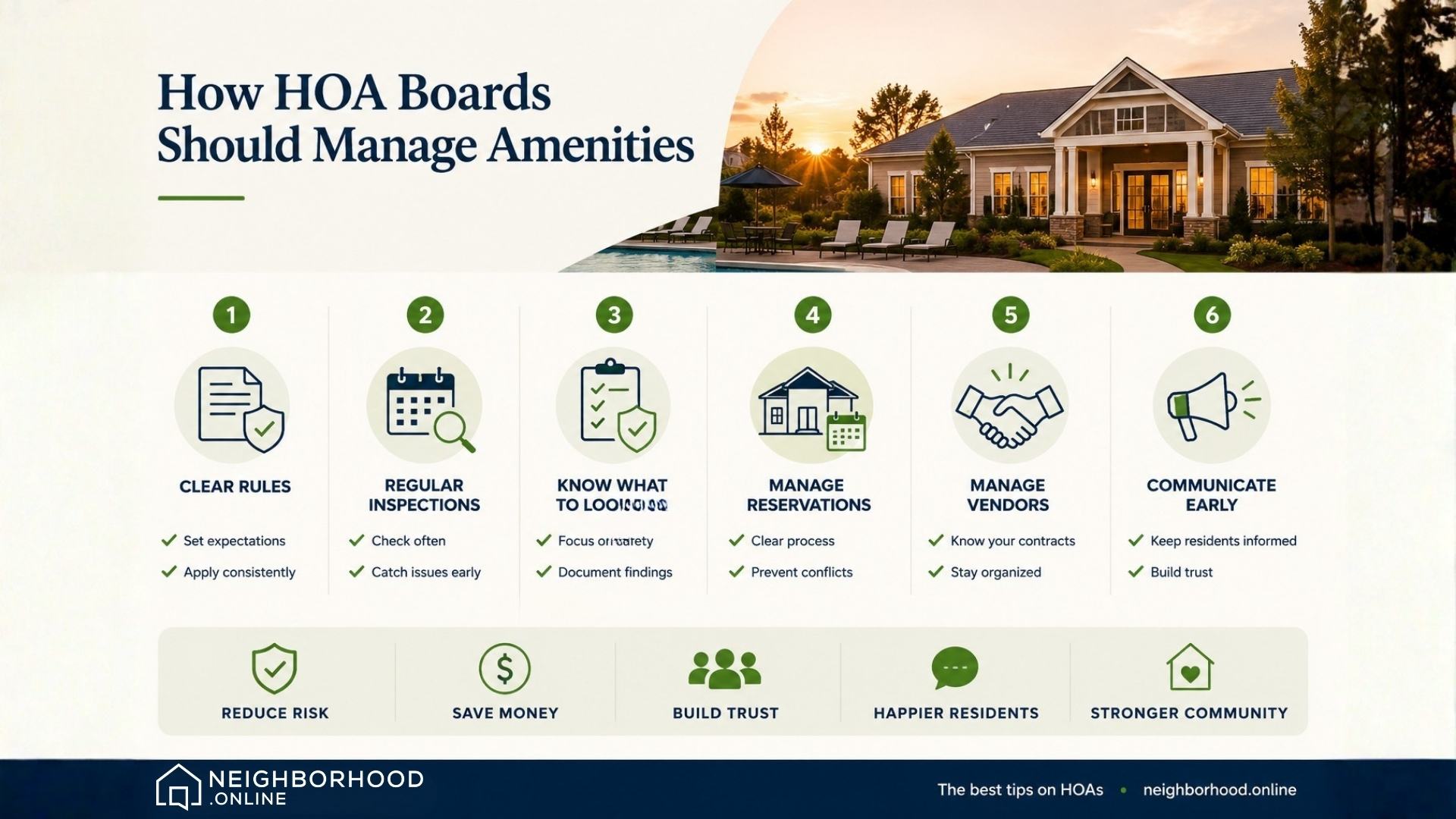
Start with written rules for every amenity. Every shared space should have a clear, posted rule set that covers hours, access, guest policies, prohibited behaviors, and enforcement consequences. Rules should be reviewed annually by the board, be consistent with your governing documents, and be distributed to residents at the start of each season. Posting them digitally on your HOA website means residents can find them without calling the board.
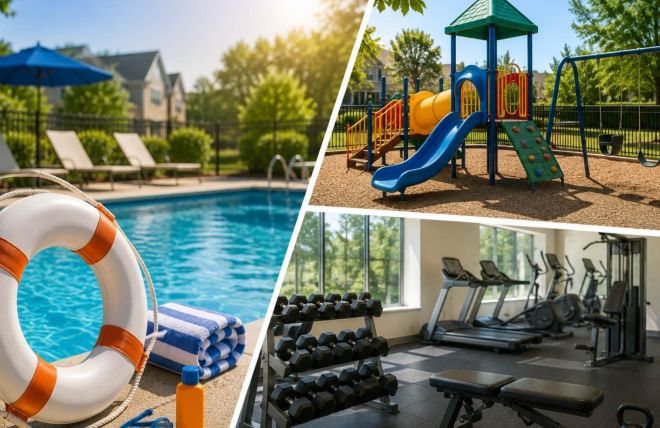
Build a regular inspection routine. The Foundation for Community Association Research is clear that every common area component should be inspected at least once per year, with more frequent checks for high-use amenities during peak season. Monthly inspections of pools, playgrounds, and fitness centers during summer are a reasonable baseline. The goal is catching small problems before they become big ones, and having a written record of what was checked and when.
What to look for varies by amenity, but the principles are the same across all of them: check structural integrity, safety equipment, signage, lighting, and anything that a resident could reasonably use in a way that leads to injury. Document what you find, assign an owner to anything that needs attention, and follow up before the next inspection.
Manage reservations with a clear system. Clubhouse and amenity reservations are a consistent source of conflict in communities that do not have a clear process. Residents double-book, damage deposits get disputed, and cleanup standards become a source of ongoing tension. A written reservation policy that covers booking windows, deposit amounts, cleanup requirements, cancellation terms, and guest limits resolves most of these disputes before they start.
Know your vendors and what they are responsible for. For every amenity vendor, your board should know what is covered in the contract, what the emergency contact process is, what documentation you should expect from them, and what your options are if the work is not done to standard. Keep vendor contracts, insurance certificates, and inspection reports in a centralized location where board members can access them without calling each other.
Communicate before residents have to ask. Opening notices, closure notices, rule reminders, and completion updates all fall into the category of communication that boards undervalue until they see the difference it makes. Residents who feel informed are dramatically less likely to complain, and dramatically more likely to follow rules. According to the Community Associations Institute, 72% of HOA communities measure event success through resident feedback. Communication is how you generate that feedback before it turns into a complaint.
How Technology Can Help
The administrative side of amenity management takes more time than most boards anticipate. Tracking inspection records, storing vendor contracts, sending seasonal notices, managing reservation requests, and keeping rule documents current all add up quickly for volunteers who are already stretched thin.
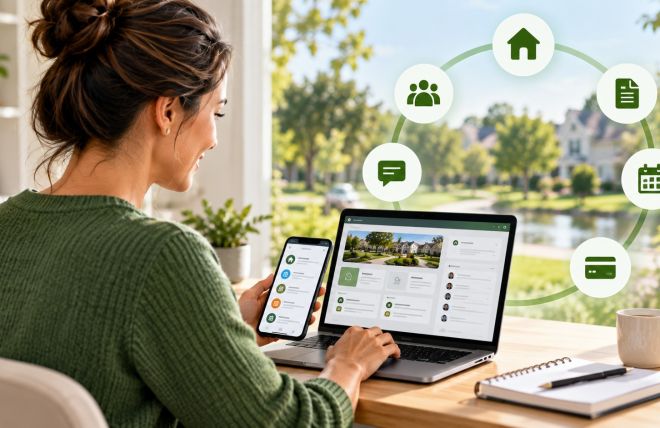
Neighborhood.online gives boards a central place to handle all of it. Rules and announcements can be posted where residents can find them without calling the board. Documents stay organized and accessible. Communication goes out through one platform with a record of what was sent and when. For communities managing amenity reservations, the platform supports scheduling features that reduce the back-and-forth that usually happens over email.
The goal is not to replace the judgment of a thoughtful board. It is to reduce the administrative friction that makes it hard for a volunteer board to stay on top of everything. A board that spends less time chasing paperwork and fielding avoidable questions has more capacity to make good decisions about the things that actually require human judgment.
A Note on Planning Ahead
The communities that manage amenities well are almost never the ones reacting to problems. They are the ones who built a routine, stuck to it, and communicated consistently enough that residents knew what to expect.
That routine does not have to be complicated. Inspection checklists, a few communication templates, a clear reservation policy, and an organized place to store documents will get most boards most of the way there. The hard part is starting before the season gets busy rather than after the first complaint arrives.
Download the Free Amenity Inspection Checklists
The Amenity Inspection Checklists include monthly inspection guides for pools, playgrounds, fitness centers, and clubhouses, with Pass, Fail, and N/A columns and a notes field for every item. A sign-off and follow-up log helps boards track open action items and assign owners before the next inspection.
References
Community Associations Institute. (2026, July/August). Your turn: Member pulse. Common Ground. https://www.caionline.org/publications/common-ground/
Fin Channel. (2024). Study: Homeowners associations are booming. https://finchannel.com/study-homeowners-associations-are-booming/119339/business-2/r-estate/2024/03/
Foundation for Community Association Research. (2026). Built to last: Strategies for extending the economic life of community associations. Community Associations Institute. https://foundation.caionline.org/
Foundation for Community Association Research. (2026). Preferred places to call home: Resident perspectives on community association living. Community Associations Institute. https://foundation.caionline.org/
If you want simple, modern, and free to start, you are in the right place.
We run your community.
Set up a complete community platform in under an hour. No developer required. No credit card needed. No accounting degree required.