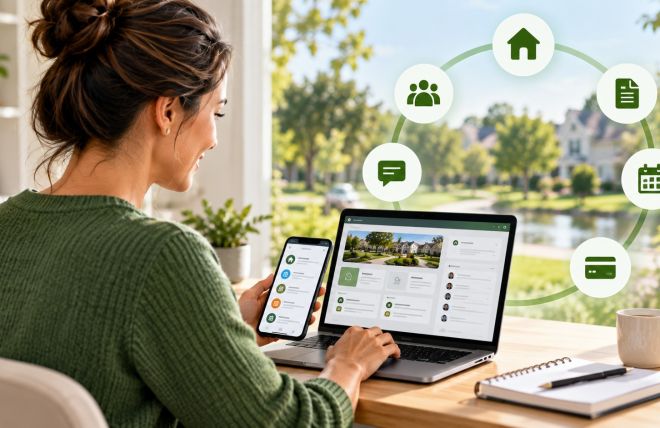
Build Your HOA Website Free
Running an HOA is a big job for a volunteer.
Neighborhood.online gives your community a modern website, document storage, and communication tools in minutes.
No technical skills required.
How to Manage Clubhouse Reservations

Keep Your Whole Community in the Loop
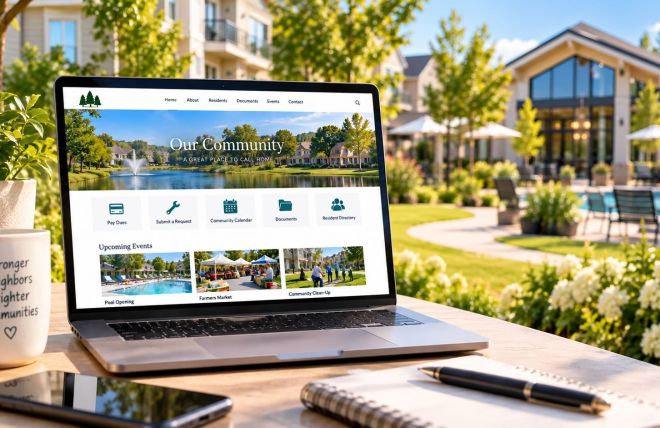
Homeowners trust boards that communicate clearly. A free Neighborhood.online website makes it easy to share meeting minutes, post updates, and give residents one place to find everything they need.
Build Your Free HOA WebsiteUpdated August 5, 2026
HOA clubhouse reservations are one of the most predictable sources of board headaches. Two residents book the same date. Someone leaves the space a mess and disputes the deposit deduction. A resident throws a party that goes two hours past the posted closing time and the neighbors complain. A board member approves a booking verbally and the paperwork never happens.
None of these situations are unusual. They happen in communities of every size, with every kind of clubhouse, every single season. And almost all of them are the result of the same problem: the reservation process was not clear enough, documented enough, or communicated consistently enough for everyone to know what was expected.
This article covers what a solid clubhouse reservation policy looks like, how to build a process that is easy for residents to use and easy for the board to manage, and how to handle the situations that come up even when you have a good system in place.
Download the Free Amenity Rules Starter Pack
Why Clubhouse Reservations Create So Much Conflict
The clubhouse is different from other amenities in one important way: it can be reserved for exclusive use. When a resident reserves the clubhouse for a private event, every other resident loses access for that window. That exclusivity creates stakes that do not exist at the playground or the fitness center, and it means the expectations around booking, behavior, and cleanup carry more weight.
According to research from the Foundation for Community Association Research, parking, noise, and shared spaces are the top three sources of conflict in HOA communities. The clubhouse sits squarely at the intersection of all three. A private event in the clubhouse can generate noise complaints from neighbors, parking pressure in the lot, and disputes about shared space access all at the same time.
The other reason reservations create conflict is that the process is often informal. A resident texts a board member, gets a verbal okay, and considers it booked. Another resident sends an email that goes unread for three days and assumes silence means approval. A third resident shows up to use the space informally because it looked empty, only to find it reserved. Each of these situations is a symptom of the same thing: no clear process that everyone knows and follows.
What a Clubhouse Reservation Policy Should Cover
Who can reserve. Reservations should be available to current residents in good standing. Define what good standing means in your community, typically residents who are current on dues and have no unresolved violations. Non-residents should not be able to reserve the clubhouse independently, though a resident may of course host an event for non-resident guests.
How far in advance reservations can be made. A booking window of 30 to 90 days is common. Without an advance booking limit, residents may try to hold dates months out for events that are not yet confirmed, which blocks other residents from accessing the space. Without a minimum advance notice requirement, the board cannot confirm the booking and prepare the space in time. Stating both limits clearly reduces the back-and-forth.
The deposit amount and refund conditions. A refundable security deposit is standard practice for clubhouse reservations. The deposit amount should reflect the actual cost of potential damage or additional cleaning, not just a symbolic figure. The policy should state clearly when the deposit is collected, when it is returned, and what conditions can result in a partial or full forfeiture. Vague language like "deposit may be withheld for damage" generates more disputes than specific language like "deposit will be returned within 14 days of the event date unless cleaning fees or damage costs are deducted."
Capacity limits. Maximum occupancy should be posted in the clubhouse and stated in the reservation policy. This is both a safety requirement and a practical necessity. Overcrowded events create noise, parking pressure, and wear on the facility that affects everyone. The posted occupancy limit is the board's clearest basis for enforcing capacity, so make sure it is accurate and visible.
Permitted and prohibited uses. The policy should address alcohol, catering, decorations, commercial use, and noise. Alcohol policy is the most important item to define clearly because it affects liability. Whether your community permits alcohol, prohibits it, or permits it with conditions, the policy should be explicit and applied consistently. Decoration rules should specify what is and is not permitted in terms of adhesives, nails, and anything that could damage walls or surfaces.
Cleanup requirements and standards. Define exactly what the space should look like when a resident leaves it. Surfaces wiped down, trash removed, furniture returned to original positions, floors swept. The clearer the standard, the easier it is to assess whether the deposit should be returned in full. A checkout checklist that the reserving resident signs off on at the end of their event is one of the most effective tools for reducing deposit disputes.
Cancellation policy. State how far in advance a reservation must be cancelled to receive a full deposit refund. A reasonable standard is 14 days for a full refund and no refund for cancellations inside that window. Whatever your community decides, the policy should be written down and acknowledged by the resident at the time of booking.
End time and noise cutoff. The event must conclude by a specific time. Post this clearly and enforce it consistently. Late events that generate noise complaints are one of the most common issues boards deal with in communities with active clubhouses, and they are almost always the result of an end time that was either not stated clearly or not enforced the first time it was violated.
How to Build a Reservation Process That Actually Works
The goal of the reservation process is to make it easy for residents to book correctly and easy for the board to manage consistently. A process that requires residents to track down a board member, wait for a callback, and then email a form they have to ask for is a process that will be ignored or worked around.
A few things that make a real difference:
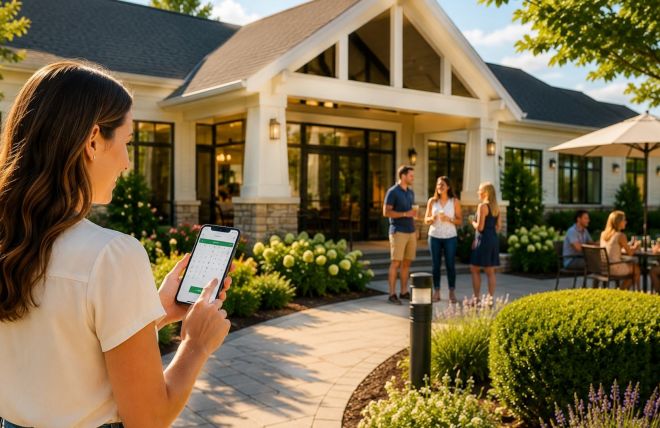
Use a single, centralized booking method. Whether that is an online form, a shared calendar, or a dedicated email address, everyone should know exactly how to submit a reservation request and where to check availability. Multiple methods, such as texting one board member and emailing another, guarantee double bookings and confusion.
Confirm every reservation in writing. Every booking should generate a written confirmation that includes the date, the time window, the deposit amount and payment method, the cleanup standard, and the end time. This protects both the resident and the board. When expectations are in writing at the time of booking, there is nothing to argue about later.
Collect the deposit before confirming the reservation. A booking is not confirmed until the deposit is received. This simple rule prevents the most common scenario in which a resident considers the space booked based on a verbal conversation while the board has not yet processed any paperwork.
Do a walkthrough before and after every event. A brief photo walkthrough of the space before the resident takes possession and after they leave is the single most effective tool for managing deposit disputes. If a condition existed before the event, the photo proves it. If it was caused during the event, the photo proves that too. This takes ten minutes and eliminates hours of back-and-forth.
Post the reservation calendar where residents can see it. Residents should be able to check availability without contacting the board. A shared calendar or a posted schedule at the clubhouse reduces the number of availability inquiries the board has to handle manually and makes the booking process feel transparent rather than controlled.
How to Handle Common Reservation Conflicts
Even with a clear policy and a good process, situations arise. Here is how to handle the most common ones:
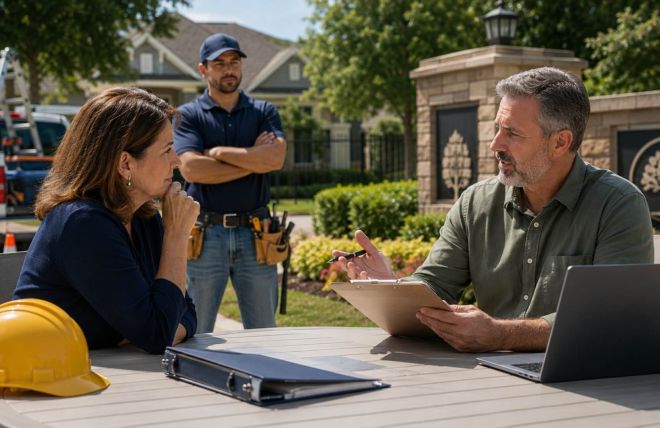
Double bookings. If two reservations somehow overlap, the board should honor the earlier confirmed booking and offer the second resident the next available date along with a sincere apology. Do not try to split the difference or ask the residents to work it out between themselves. The board made the error and the board should resolve it.
Deposit disputes. Refer to the photo walkthrough documentation and the cleanup checklist. If the standard was met, return the deposit in full within the stated timeframe. If it was not met, document the specific condition, state the associated cost, and return the remainder. A written explanation of any deduction prevents escalation in most cases.
Events that run long. A board member or designated contact should be reachable on the night of events in case the end time is not being respected. A polite, direct reminder is almost always enough. If a resident repeatedly violates the end time, a temporary suspension of reservation privileges is a defensible response, provided the policy states that this consequence is possible.
Informal use of the space. When a resident uses the clubhouse without a reservation, address it privately and directly. Remind them of the reservation process and the reason it exists. If the behavior continues, a written warning is appropriate. The goal is consistent enforcement, not punishment.
How Technology Can Help
The administrative side of clubhouse reservations takes more time than it should in most communities because the process is managed through a combination of text messages, emails, and phone calls that no one is tracking systematically. A centralized platform changes that.
For boards managing multiple amenities, keeping reservation records for the clubhouse alongside rules and inspection records for the pool, playground, fitness center, and other shared spaces in one system makes the whole operation significantly easier to maintain.
The Bottom Line
Most clubhouse reservation conflicts are not caused by difficult residents. They are caused by a process that was not clear enough, documented enough, or communicated consistently enough for everyone to know what was expected. A written policy that covers booking, deposits, capacity, cleanup, and end times, combined with a single booking method and written confirmations for every reservation, resolves the vast majority of issues before they start.
Start with a clear policy, build a simple process, document everything, and enforce the rules consistently. That is the combination that makes clubhouse management significantly less stressful for everyone involved.
Download the Free Amenity Rules Starter Pack
The Amenity Rules Starter Pack includes a ready-made clubhouse rules template covering reservations, deposits, capacity, alcohol policy, cleanup requirements, decoration rules, and cancellation terms. Six ready-to-send communication templates are also included for new rules, closures, and seasonal updates.
References
Foundation for Community Association Research. (2026). Preferred places to call home: Resident perspectives on community association living. Community Associations Institute. https://foundation.caionline.org/