Build Your HOA Website Free
Running an HOA is a big job for a volunteer.
Neighborhood.online gives your community a modern website, document storage, and communication tools in minutes.
No technical skills required.
Operating vs Reserve Funds

If you’ve ever sat in an HOA budget meeting and heard someone ask, “Should this come out of operating or reserves?”, you’re not alone.
Even experienced boards sometimes struggle with the difference. Yet understanding this one concept is one of the most important foundations of healthy HOA finances.
When operating expenses and reserve expenses get mixed together, budgets become misleading, reserves slowly drain, and communities eventually face the one thing every homeowner fears: a surprise special assessment.
The good news is that the distinction is actually simple once you break it down.
Operating Funds: The Cost of Running the Community Today
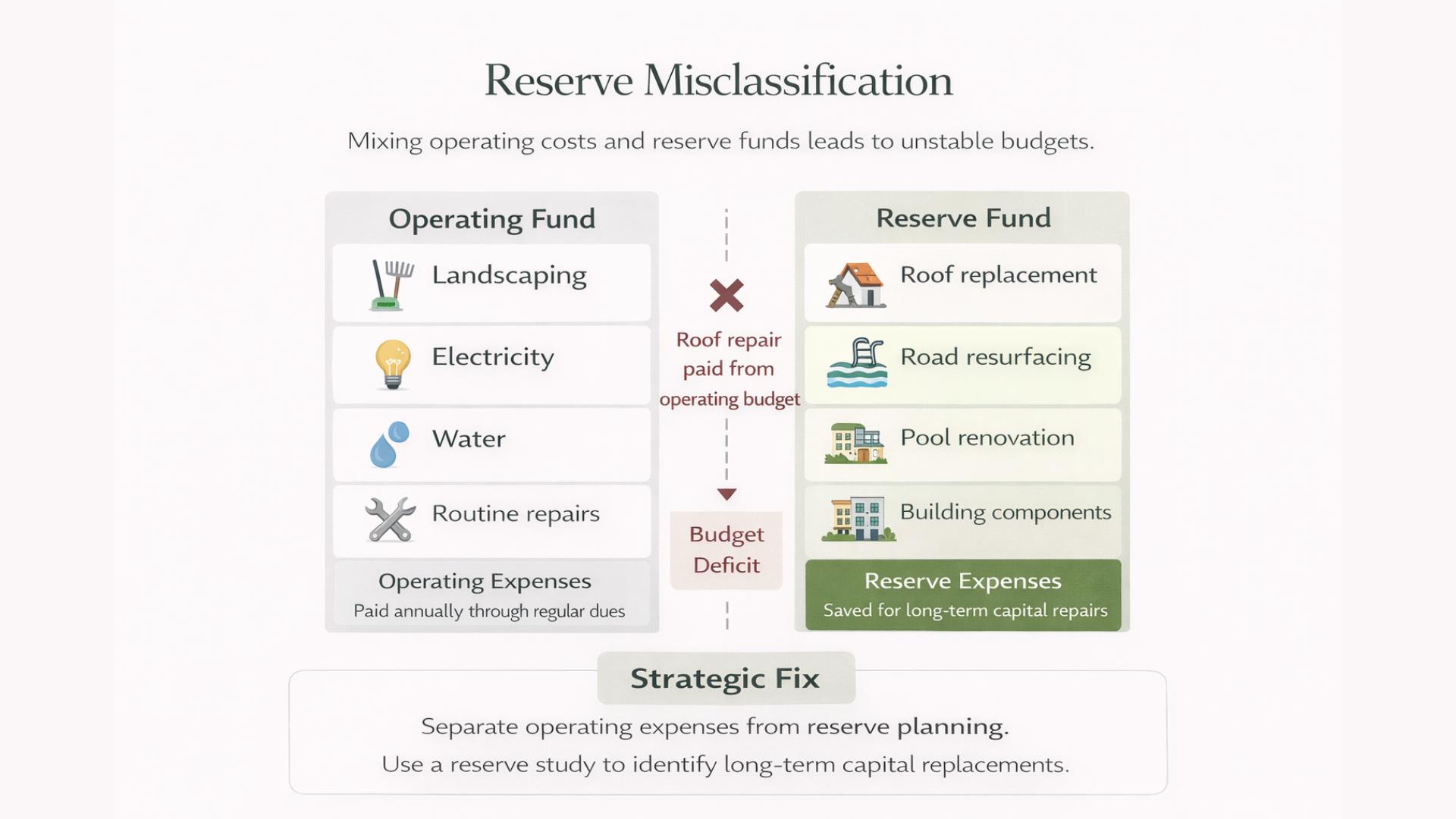
Operating funds pay for the day-to-day costs of keeping the community running. These are expenses that happen regularly and are required to maintain normal operations.
Think of operating funds as the HOA’s monthly household budget.
Common operating expenses include:
- Landscaping maintenance
- Pool cleaning and chemicals
- Electricity for common areas
- Janitorial services
- Minor repairs
- Management company fees
- Insurance premiums
- Administrative costs
These expenses are predictable and recurring. They typically appear in the budget every year and are funded through homeowner dues.
If your board wants a deeper look at how operating budgets are built, our guide on Better Budget Basics walks through the building blocks of a strong HOA financial plan.
Reserve Funds: Preparing for the Big Repairs
Reserve funds serve a completely different purpose. Instead of paying for routine operations, they are used for large repairs and replacements that happen periodically over time.
Every community has physical assets that eventually wear out. Roofs age. Pavement cracks. Pools need resurfacing.
Typical reserve expenses include:
- Roof replacement
- Parking lot resurfacing
- Pool resurfacing
- Elevator modernization
- Fence replacement
- Major structural repairs
- Clubhouse renovations
These costs might only occur every 10, 15, or even 25 years. Reserve funds allow the community to save gradually so homeowners aren’t forced to pay the full cost all at once.
If you want a deeper dive into how reserve accounts work, our article Reserve Funds Explained in Simple Terms breaks the concept down further.
A Simple Rule Most Boards Use
Many boards use a straightforward guideline:
- Operating funds maintain things.
- Reserve funds replace things.
If an expense happens regularly to keep the community functioning, it usually belongs in the operating budget.
If the expense replaces a major asset that lasts many years, it typically belongs in reserves.
Why Mixing Funds Causes Financial Problems
When operating and reserve expenses get blurred together, the financial picture of the community becomes distorted.
For example, if a major repair is paid out of the operating budget, the board might believe reserves are healthier than they actually are.
On the other hand, if routine maintenance gets charged to reserves, long-term savings quietly disappear.
Over time, this leads to underfunded reserves and difficult choices for the board. Communities may be forced to delay needed repairs, raise dues abruptly, or issue special assessments.
Maintaining clear separation between these funds is why many communities follow the practice of maintaining separate accounts for operating and reserve funds .
Why Proper Classification Builds Financial Stability
When boards consistently categorize expenses correctly, several things improve immediately.
- Financial reports become easier to understand
- Reserve studies become more accurate
- Budget planning becomes more predictable
- Homeowners gain confidence in the board’s decisions
Good financial structure also makes long-term planning easier. Communities can anticipate major repairs instead of reacting to them.
If your board is thinking ahead, our article on developing a long-term financial plan for your HOA explains how to plan for major expenses years in advance.
Budget Transparency Matters Too
One hidden benefit of separating operating and reserve expenses is transparency. When homeowners clearly understand where money is going, trust in the board improves dramatically.
Clear financial communication is a key part of healthy communities, which is why many boards focus on financial transparency in HOAs as part of their governance strategy.
The Bottom Line
Operating funds keep the community running today. Reserve funds protect the community tomorrow.
When boards clearly separate these two financial tools, budgets become easier to manage, reserve planning becomes more accurate, and communities avoid many of the financial surprises that lead to homeowner frustration.
A little clarity in the budget today can prevent much bigger problems down the road.


If you want simple, modern, and free to start, you are in the right place.
We run your community.
Set up a complete community platform in under an hour. No developer required. No credit card needed. No accounting degree required.