Using Your HOA Website as the Communication Hub

Make HOA Information Easy to Find
These templates help boards post notices and updates in a clear, consistent way so homeowners know where to look and what to expect.
If residents do not know where to look for information, confusion is inevitable.
Many HOA boards rely heavily on email. Some use social media. Others text. The result is scattered communication and repeated questions.
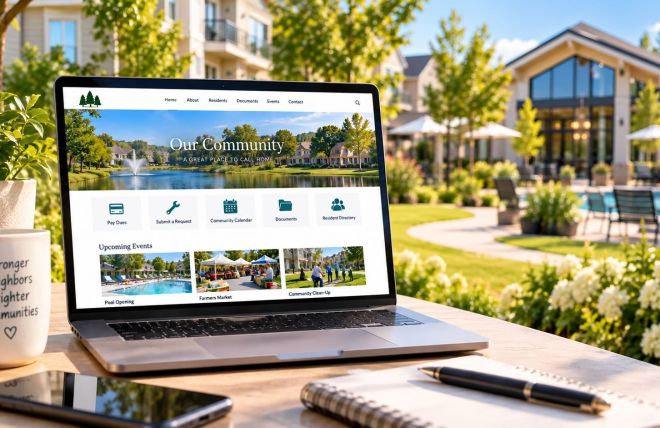
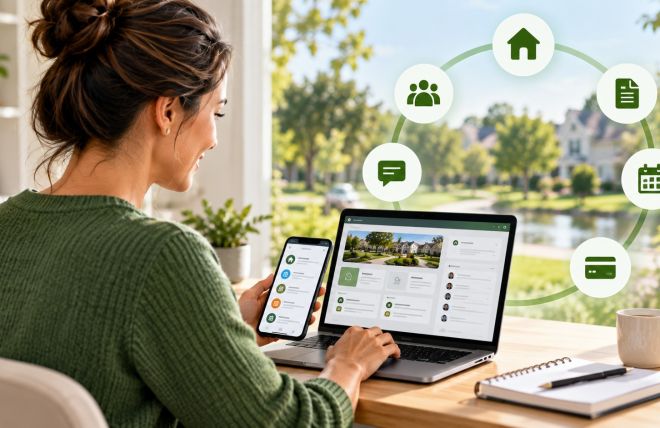
A centralized HOA website changes that dynamic. When your website becomes the single source of truth, communication becomes clearer, calmer, and more predictable.
Why Email Alone Is Not Enough
Email feels fast. But it is temporary.
- Messages get buried
- Residents miss announcements
- New homeowners never see past updates
- Boards repeat the same information
When communication only lives in inboxes, it disappears quickly. That creates frustration on both sides.
Email works best when it points back to something permanent. That permanent location should be your HOA website.
What Should Be Posted on Your HOA Website
If your website is going to function as a HOA communication hub, clarity about what belongs there is essential.
At minimum, your site should include:
- Meeting announcements and agendas
- Approved meeting minutes
- Rule updates and policy changes
- Project updates and timelines
- Event information
- Emergency notices
The goal is not volume. The goal is consistency.
If you are evaluating your current setup, reviewing your HOA website strategy is a good place to start.
Communicate Faster With Less Stress
Ready-to-use templates for announcements, reminders, and events so boards stop rewriting the same messages every time..
How Often Should You Update It
Inconsistent posting creates the same confusion as no posting at all.
A simple structure works best:
- Post meeting announcements at least one week in advance
- Publish approved minutes promptly after meetings
- Update project timelines when milestones change
- Keep event information current and visible
Residents do not need daily updates. They need predictable updates.
Website First, Then Email
One of the most effective communication shifts a board can make is simple:
Post on the website first. Then send email directing residents to the post.
This approach creates:
- A searchable archive
- A consistent location for information
- Fewer repeated explanations
- Clear documentation of communication history
It also supports a broader strategy of centralized communication, as outlined in why a centralized HOA communication hub matters.
Reducing Rumors and Speculation
When information is not easily accessible, speculation fills the gap.
A visible, organized website reduces that risk. If residents know where to check for updates, uncertainty decreases.
This is especially important during projects, rule changes, or unexpected events.
Making It Easy for Future Boards
A strong website does not just help current residents. It helps future board members.
- Decisions are documented
- Policies are easy to reference
- Past communications are searchable
- New leaders can get up to speed quickly
That continuity reduces stress during transitions and improves governance over time.
Start Simple
You do not need a complex system to make your website effective.
Start by:
- Choosing one place for official updates
- Using consistent post structure
- Linking to website posts from email instead of repeating full messages
- Keeping archived information organized
Clear communication is not about volume. It is about visibility.
When residents know exactly where to find information, complaints decrease and cooperation increases.
A centralized website is not just a convenience. It is a governance tool.