Clear Communication, Stronger Communities: The HOA Guide to Messaging, Newsletters & Events

Communicate Faster With Less Stress
Ready-to-use templates for announcements, reminders, and events so boards stop rewriting the same messages every time..
Most HOA conflicts don’t start with rules. They start with confusion.
When homeowners don’t understand what’s happening, why it’s happening, or where to find information, frustration fills the gap. That frustration often shows up as complaints, assumptions about intent, and disengagement from the community.
Clear communication changes that dynamic entirely.
Confusion leads to complaints. Clarity leads to cooperation.
This guide breaks down how HOA boards can communicate more effectively through tone, consistency, websites, and events without turning communication into a full-time job.
Why Communication Matters More Than Rules
HOA rules exist to create structure, but communication is what makes that structure workable in real life.
When boards focus heavily on enforcement without equally prioritizing communication, even reasonable decisions can feel arbitrary or hostile to homeowners. People are far more likely to cooperate when they understand the context behind decisions.
Clear communication helps homeowners feel informed instead of surprised. It reduces speculation and minimizes the emotional charge that often surrounds HOA issues.
This becomes even more important in communities with offsite owners, renters, or seasonal residents. In those cases, digital communication is often the primary connection to the community. That’s why many associations now view digital communication as a game changer for offsite condo owners.
When boards communicate early, clearly, and consistently, they prevent many problems before rules ever need to be referenced.
Tone and Consistency: The Secret to Reducing Homeowner Stress
What a board says matters, but how it says it matters just as much.
A sudden shift in tone can raise alarms. Friendly messages one month followed by formal or legal-sounding notices the next often make homeowners assume something is wrong, even when it isn’t.
Strong HOA communication relies on consistency. That includes consistent language, consistent formatting, and a consistent level of friendliness and professionalism.
Plain language is almost always more effective than legal phrasing. Most homeowners are not lawyers, and communication that sounds like a warning letter tends to create defensiveness rather than cooperation.
Templates and shared language help boards maintain a steady voice, especially when multiple people contribute to communication. Friendly, predictable messaging reduces stress for homeowners and board members alike.
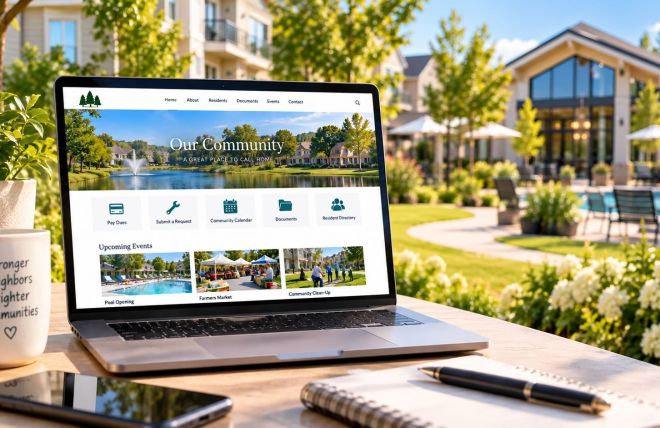
Using Your HOA Website as the Communication Hub
Email alone is not enough.
Important information gets buried in inboxes, forwarded without context, or missed entirely. This is why effective boards treat their HOA website as the central source of truth.
A well-used HOA website clearly answers basic questions like where meeting notices are posted, where newsletters live, and where homeowners can find updates and reminders.
Boards don’t need to post constantly, but they do need to post reliably. Notices before meetings, updates after meetings, and regular newsletters create a rhythm that homeowners can rely on.
Knowing what to post and where to post it is a core part of using an HOA website effectively. When information is centralized, boards receive fewer repetitive questions and homeowners feel more confident that they’re informed.
Consistency matters more than volume. A predictable posting pattern builds trust over time.
Events: The Most Underrated Community-Building Tool
Rules manage behavior. Events build relationships.
HOA events don’t need to be elaborate to be effective. Simple, low-pressure gatherings help humanize the board and create informal opportunities for connection.
Neighborhood yard sales, spring socials, meet-the-board nights, and volunteer days all serve a similar purpose. They create space for casual conversations that don’t revolve around complaints or enforcement.
When homeowners see board members as neighbors rather than distant decision makers, communication improves naturally. Issues are more likely to be raised early and addressed constructively.
Events are also easier to manage when boards have a clear system for planning and promotion. Many associations rely on event management software to keep details organized and communication consistent.
Strong communities are built as much through shared experiences as they are through shared rules.
How to Set Up a Simple Communication Workflow
One of the most common communication breakdowns happens behind the scenes.
If no one knows who is responsible for writing, reviewing, posting, or sending messages, communication slows down or becomes inconsistent. Messages sit in drafts, get rewritten multiple times, or go out later than intended.
A simple communication workflow solves this problem.
Most boards benefit from clearly defining who drafts messages, who reviews them, who posts them to the website, and who sends them to homeowners.
This doesn’t require a large team or complex process. It simply requires agreement.
When communication responsibilities are clear, messages go out faster and with less friction. That clarity reduces stress for board members and improves the overall quality of communication.
Messaging Mistakes HOAs Make (And How to Fix Them)
Even well-intentioned boards fall into common communication traps.
Slow communication creates anxiety. When boards go quiet, homeowners fill the silence with assumptions.
Confusing tone sends mixed signals. Friendly one month and formal the next feels unstable.
Overly legal language alienates residents. Most people don’t speak in bylaws, and legal phrasing often escalates situations unnecessarily.
Last-minute notices make boards look disorganized, even when they’re not. Late communication erodes trust quickly.
The fix is not perfection. It’s predictability.
Clear timing, consistent tone, and accessible information solve most communication issues before they start.
Templates Save Lives (Well… Your Sanity)
Most boards don’t struggle because they don’t care. They struggle because they’re reinventing communication every single time.
Templates remove that burden.
They help boards communicate faster, maintain a consistent voice, and reduce second-guessing. They also make communication easier to delegate without worrying about tone or accuracy.
That’s why February focuses on communication templates. Newsletters, announcements, reminders, and event messages that boards can actually use without starting from scratch.
When communication becomes easier, governance becomes calmer.
And calmer boards build stronger communities.