Build Your HOA Website Free
Running an HOA is a big job for a volunteer.
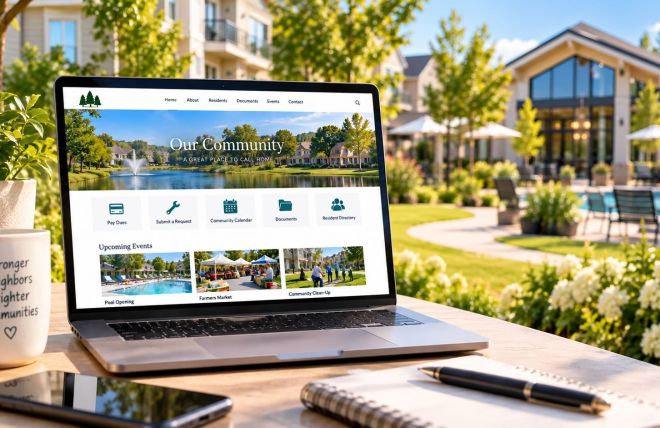
Neighborhood.online gives your community a modern website, document storage, and communication tools in minutes.
No technical skills required.
Board Burnout Is Real: Let Tech Do the Heavy Lifting

Nobody joins an HOA board expecting it to take over their life. But for a lot of volunteer leaders, that is exactly what happens. The emails start piling up. Neighbors text you on weekends. You are chasing late dues payments, hunting for last year's meeting minutes, and somehow also planning the summer block party. Board burnout is real, and it is one of the most common reasons good people quietly step down from their roles.
If any of that sounds familiar, this post is for you. HOA board burnout does not have to be the price of running a well-managed community. Here is why it happens, what it costs your neighborhood, and what you can actually do about it.
What HOA Board Burnout Actually Looks Like
Burnout does not always announce itself. It tends to build slowly, one small frustration at a time, until the cumulative weight becomes too much. For HOA board members, it usually looks something like this.
You volunteered because you care about your neighborhood. Maybe you wanted to see the common areas improved, or you were frustrated with how things were being managed and figured you could do better. For a while, the role felt manageable. Then the scope of it became clear.
HOA boards are typically made up of full-time working adults, retirees, and busy parents who are donating their evenings and weekends to a job that has no job description, no training, and no end to the to-do list. The expectations from neighbors can be relentless. The administrative tasks are repetitive and time-consuming. And the tools many boards are working with, think spreadsheets, email chains, and paper checks, make everything harder than it needs to be.
Some of the most common signs a board is heading toward burnout include:
- Manually chasing late dues payments every month
- Spending hours on email threads that never reach a clear decision
- Losing track of important documents at tax time or during vendor disputes
- Handling resident complaints without any consistent process or paper trail
- Board members quietly disengaging because the workload feels thankless
None of this is a character flaw. It is a systems problem, and systems problems have solutions.
Why Board Burnout Hurts the Whole Community
When board members burn out, the neighborhood feels it. Decisions slow down. Maintenance requests go unaddressed. Communication with homeowners becomes inconsistent or stops altogether. Good candidates stop volunteering for open board seats because the reputation of the role has become overwhelmingly negative.
There is also a financial risk. Burned-out boards are more likely to make reactive decisions rather than strategic ones. They may defer important maintenance because there is no bandwidth to plan ahead, which can lead to far more expensive emergency repairs down the road. Understanding how to build a solid financial plan is one of the best ways to reduce the pressure on any board. The guide on HOA financial foundations and building a healthy budget is a good place to start if your board is feeling stretched thin.
Burnout also creates turnover, and turnover creates knowledge gaps. When an experienced treasurer or president steps down without a proper handoff, the incoming board member has to rebuild from scratch. That is a preventable problem with the right documentation habits in place.
How HOA Boards Can Get Ahead of Burnout
The single most effective thing a board can do is stop trying to run a modern community with outdated tools and processes. Here is a practical approach to lightening the load.
Automate the Repetitive Stuff
Dues collection is one of the biggest time drains for HOA boards. Sending reminders, tracking who has paid, following up on late payments, and depositing checks eats up hours every month. Automating this process through an online payment system eliminates most of that friction. Homeowners pay when it is convenient for them, reminders go out automatically, and your treasurer spends their time on actual financial oversight rather than chasing checks.
Centralize Your Documents
One of the most common sources of board stress is not being able to find things. The vendor contract from two years ago. The approved budget from last spring. The meeting minutes a homeowner is requesting. When documents live in someone's personal email or a shared drive nobody has fully organized, every search becomes a small crisis. A centralized document library that board members and homeowners can access any time solves this permanently.
Create a Real Communication Channel
Email is not a community communication strategy. It is a patchwork solution that puts board members personally in the middle of every conversation. A proper communication hub, where announcements go out to all homeowners in one place and residents have a clear channel to submit questions or concerns, takes an enormous amount of reactive work off the board's plate. Many communities start by improving their HOA communication strategy and find that alone makes a measurable difference in how much time the board spends fielding individual messages.
Build Processes for Common Situations
A lot of board time gets consumed by situations that come up over and over: maintenance requests, rule violation complaints, vendor bids, and homeowner disputes. When there is no established process, each one gets handled differently and takes longer than it should. Creating simple workflows for these recurring situations means board members spend less time reinventing the wheel every time a familiar problem shows up.
Distribute the Work
Many boards operate with an uneven distribution of labor, where one or two people carry the weight for everyone else. This is both unsustainable and unfair. Clear role definitions help. So does understanding what each board position is actually responsible for. The breakdown of HOA board responsibilities and leadership roles is a useful reference for boards that want to make sure the work is shared equitably.
How Technology Can Help HOA Boards Work Smarter
The right platform does not just organize your files. It gives volunteer board members their evenings back.
Neighborhood.online is built specifically for HOA boards and brings together the tools that matter most in one place. Dues collection, document storage, community announcements, event scheduling, online voting, and maintenance request tracking all live in a single platform that both board members and homeowners can use without any technical background.
Instead of switching between spreadsheets, email threads, and paper records, your board works from one central hub. Homeowners get a place to find what they need without calling or emailing a board member directly. And new board members can get up to speed quickly because everything is documented and accessible from day one.
For boards that are considering whether to hire a property management company because things feel unmanageable, it is worth asking whether the problem is actually the workload or the lack of systems. The guide on choosing HOA management software can help your board think through that decision clearly before committing to an expensive monthly contract.
Conclusion
Board burnout is not inevitable. It is usually a sign that a well-meaning group of volunteers is trying to manage a complex operation without the right tools or structure. The good news is that both of those things are fixable.
Start by identifying where most of your time is actually going each month. Dues collection, document requests, and reactive communication are usually the biggest culprits. Address those first. Build simple processes for the situations that come up repeatedly. And invest in a platform that was designed for exactly the kind of work your board is doing.
Running a great HOA does not require sacrificing your personal time indefinitely. It requires the right systems, clearly defined roles, and tools that work for volunteers rather than against them.